Soft Structures: On Carrying, On Becoming
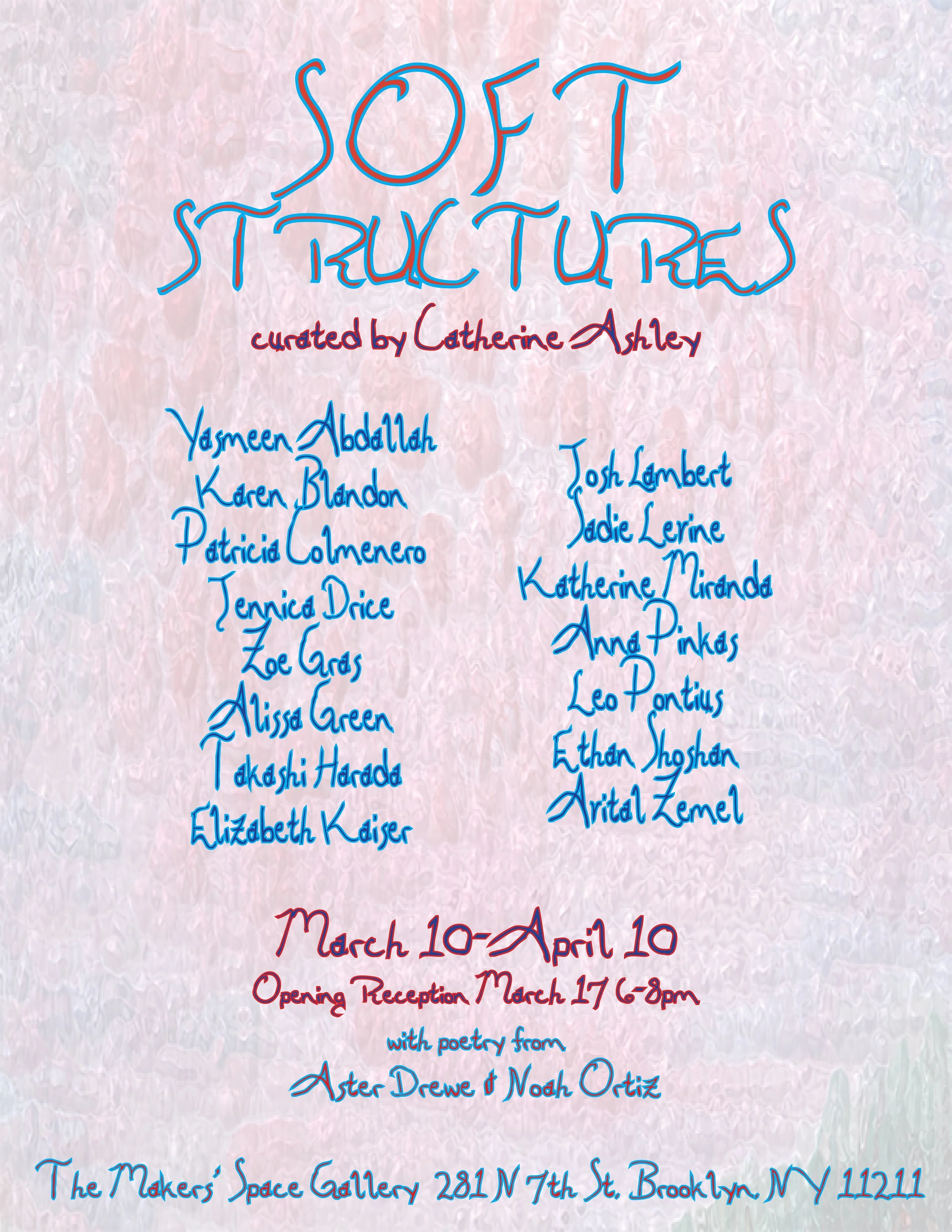
Soft Structures
ABOUT THE CURATOR
Catherine Ashley is a multimedia designer, performance artist and educator working across sound, installation, performance, and moving image. Guided by process and play, her work moves fluidly across disciplines. With a background in film, composition, theatre, and object-making, she creates layered environments that explore gesture, memory, and systems of transformation emphasized by visual and auditory experiences. Ashley has exhibited work across the Northeast and internationally. MFA in Digital + Media, RISD.
Learn more about the Makers Ensemble and Makers Space:
My first show of the year, Soft Structures at The Makers' Space, did not announce itself loudly. It unfolded. It gathered. It stayed.
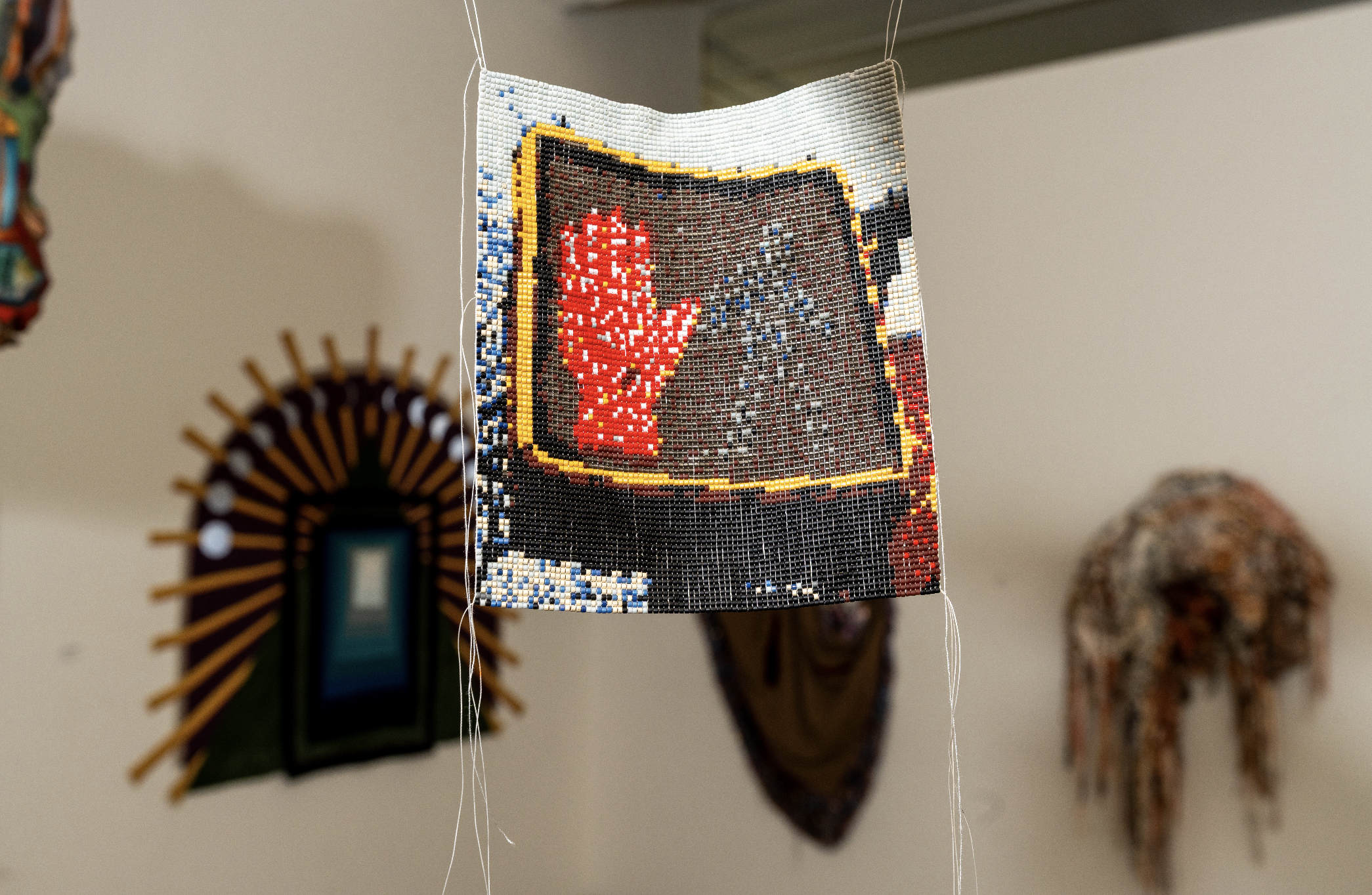
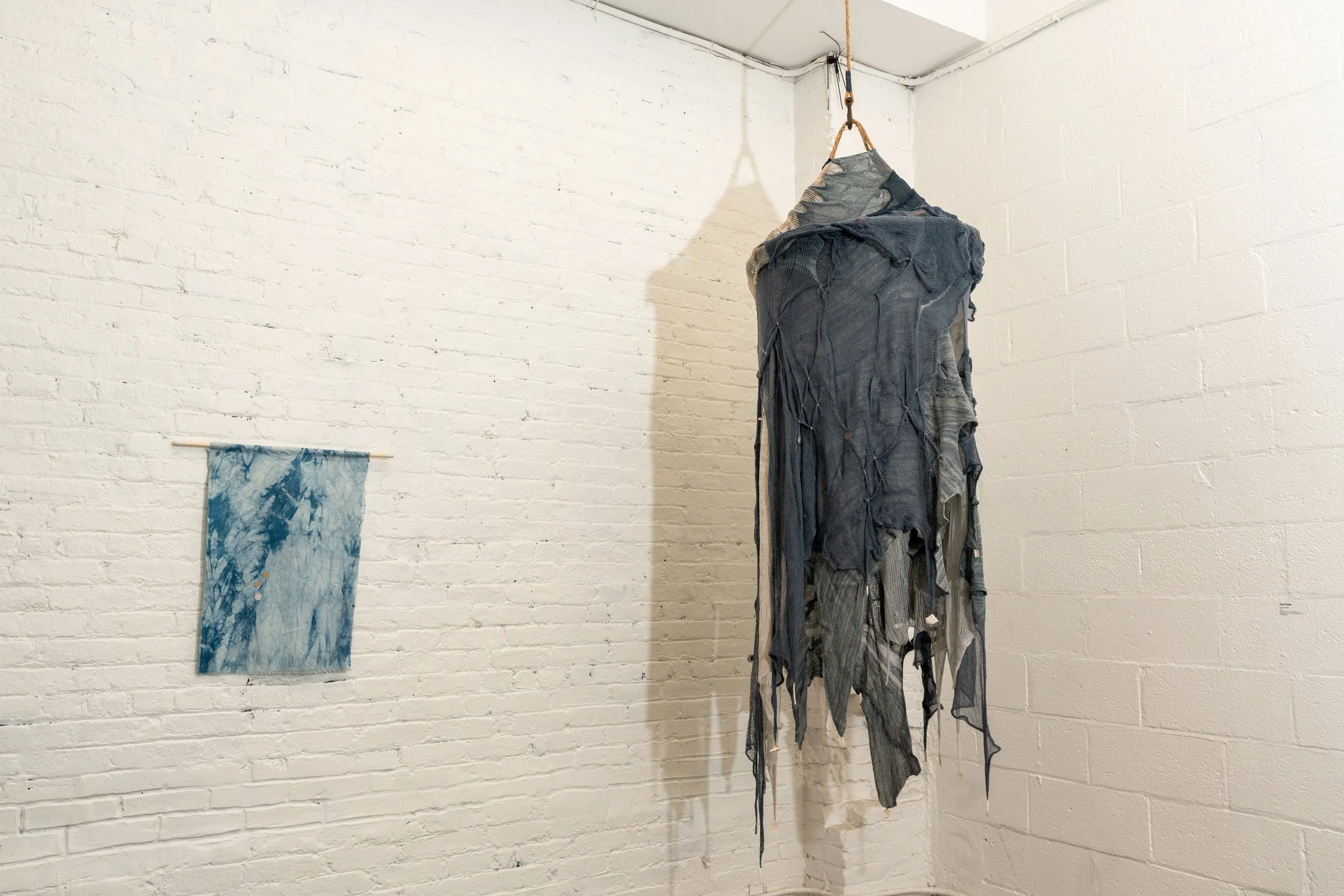
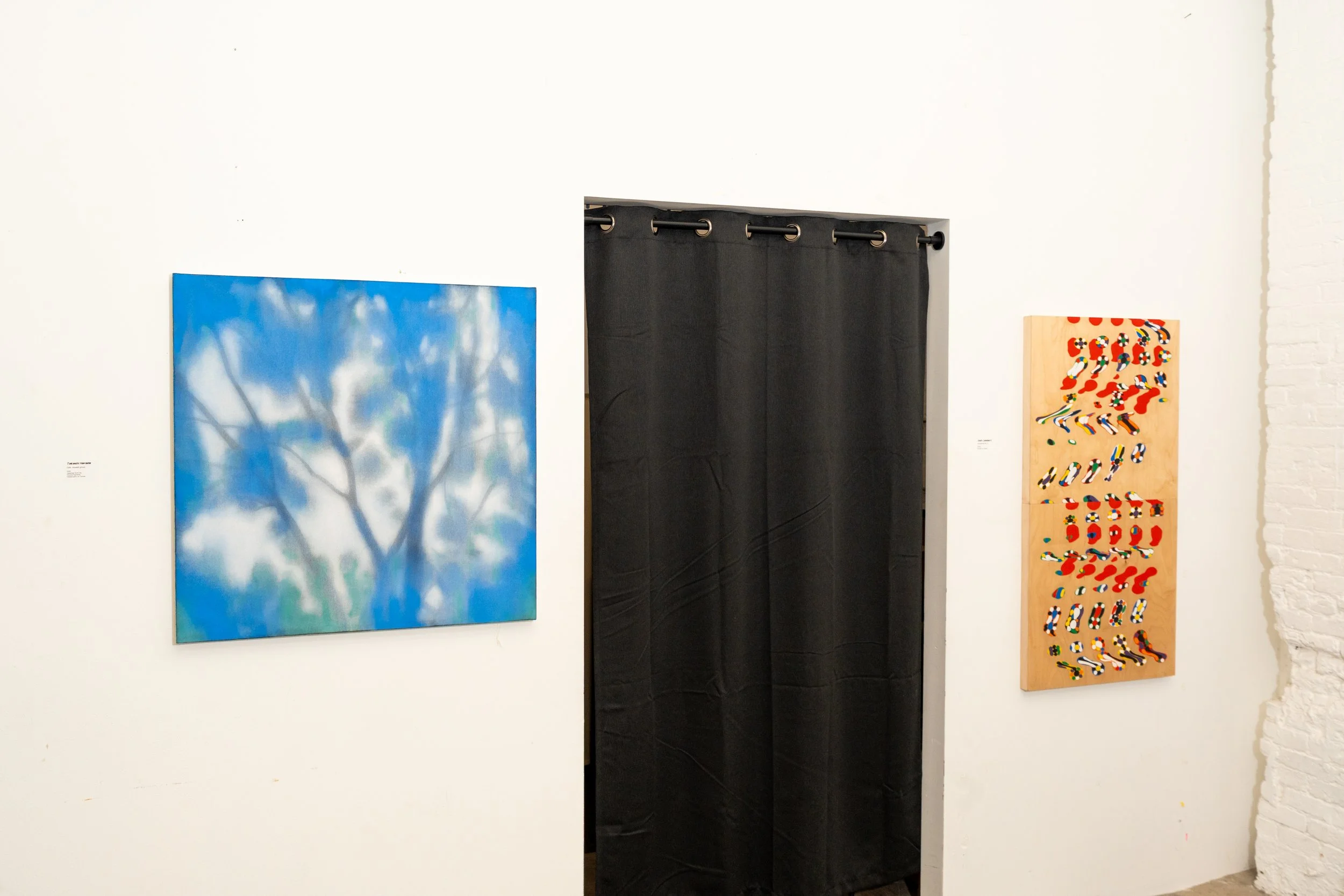
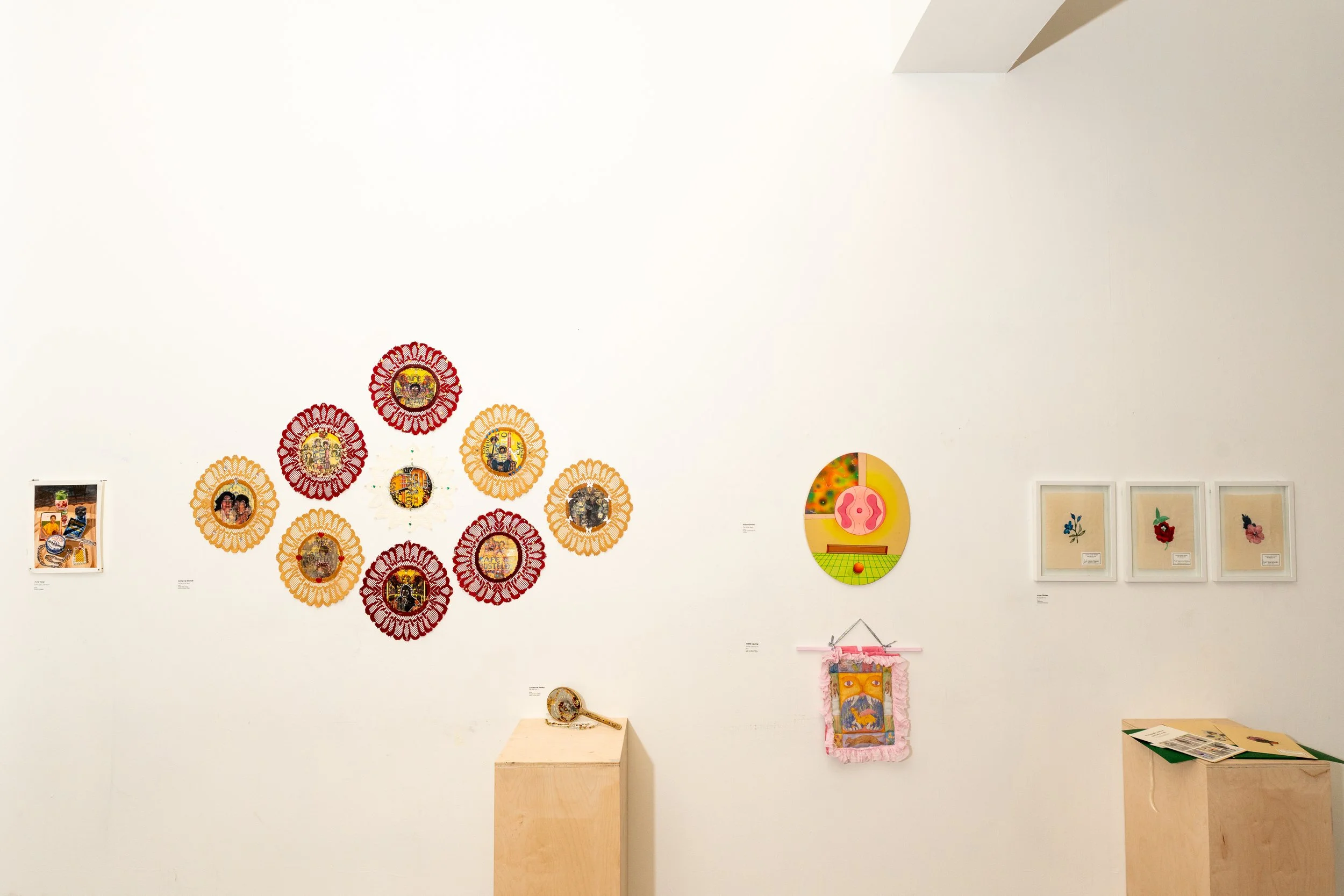
I entered the space and felt something loosen, as if the room itself permitted breath. Work hovered, stitched, suspended, refusing the cold authority of the white wall. There was no demand for silence, no pressure to consume the work as product. Instead, there was an invitation: to linger, to speak, to feel alongside it. A quiet but insistent refusal of the capitalist gallery model where the body becomes cautious, where even breath feels intrusive.
In its place, something else formed. A living structure. Soft, but not fragile.
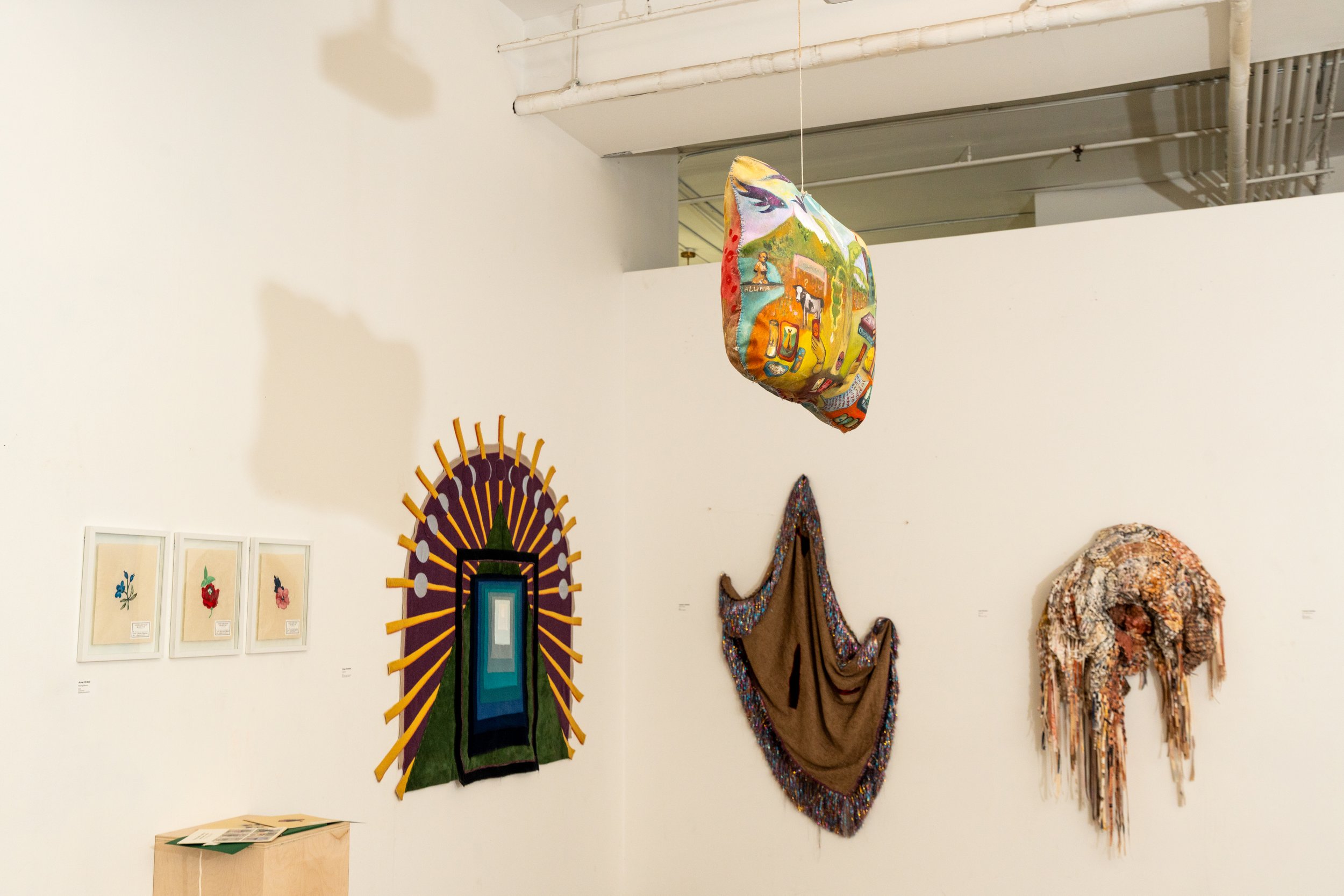
Angel J. Rivas, Lutriz Studios @lutrizstudios
I keep returning to Julian Bell’s writing on painting, where he resists the idea of the image as a fixed window and instead frames it as something relational, something that exists through time, through looking, through the body encountering it. Painting, in this sense, is not an object that resolves meaning, but a site where meaning continues to unfold.
That felt present here.
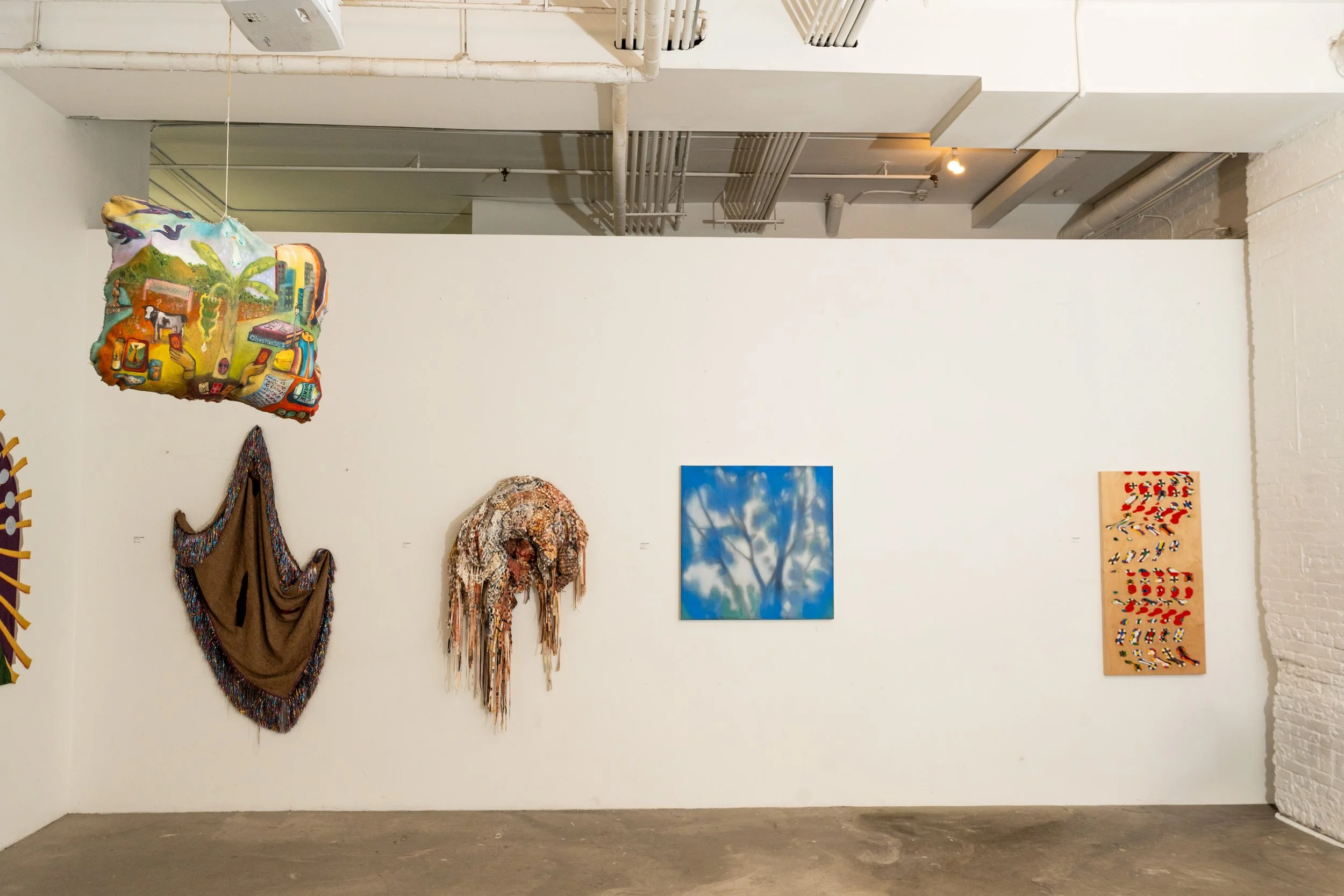
Nothing in Soft Structures asked to be finalized. The works, including my own, seemed to exist in states of becoming. Edges were visible. Seams were not hidden. Materials carried their histories openly. Painting extended beyond surface, into fabric, into thread, into space itself.
My piece sits inside that expansion.
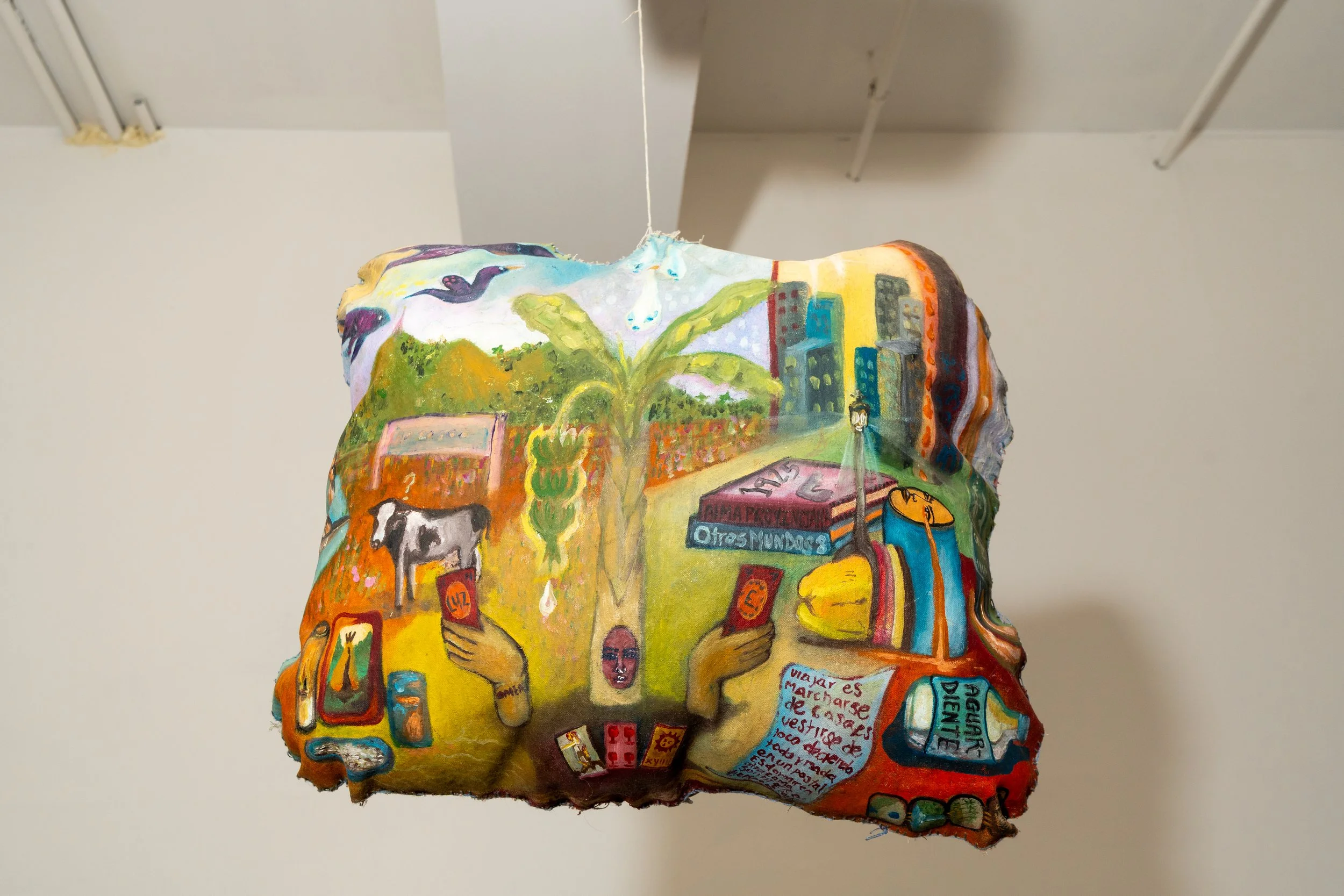
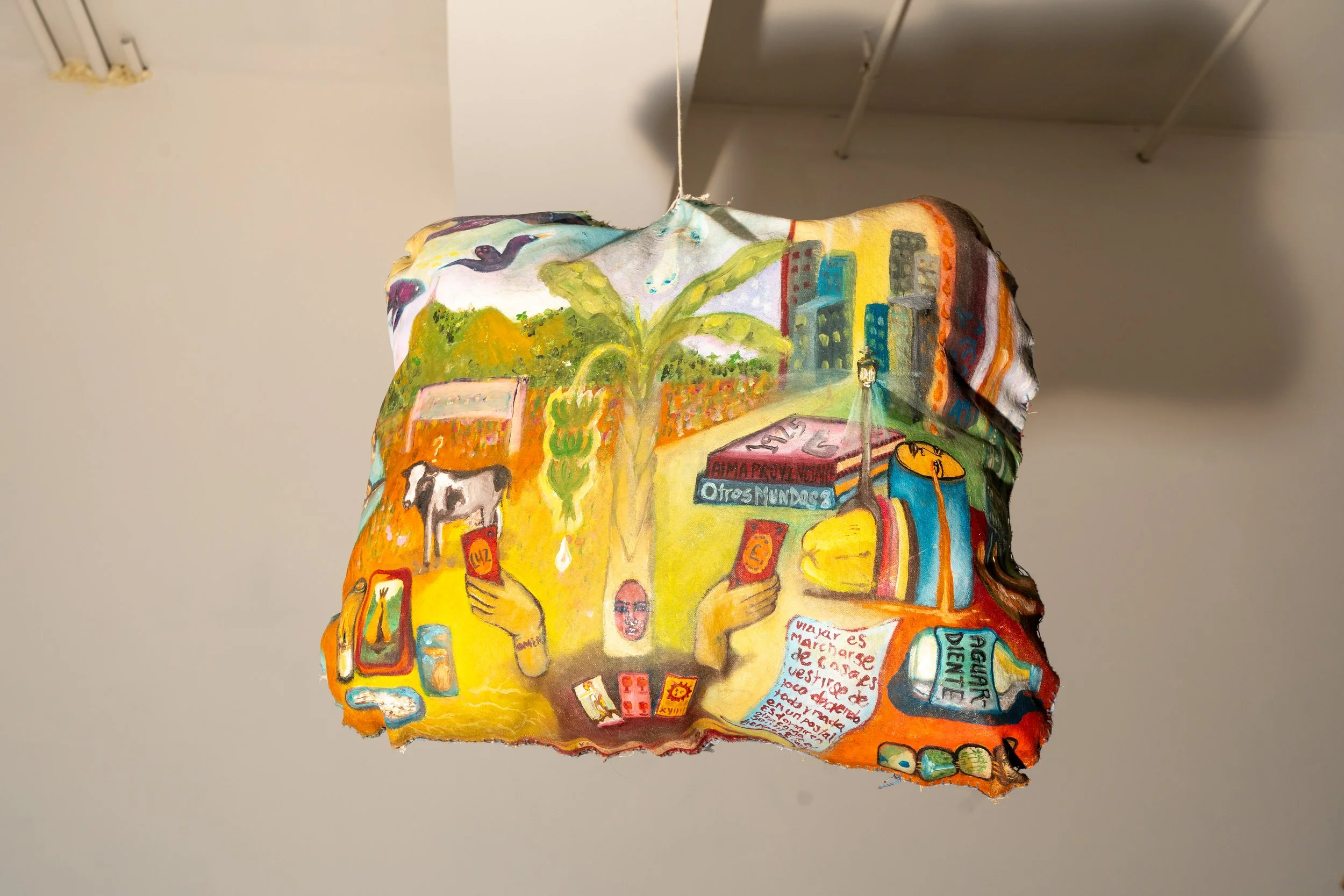
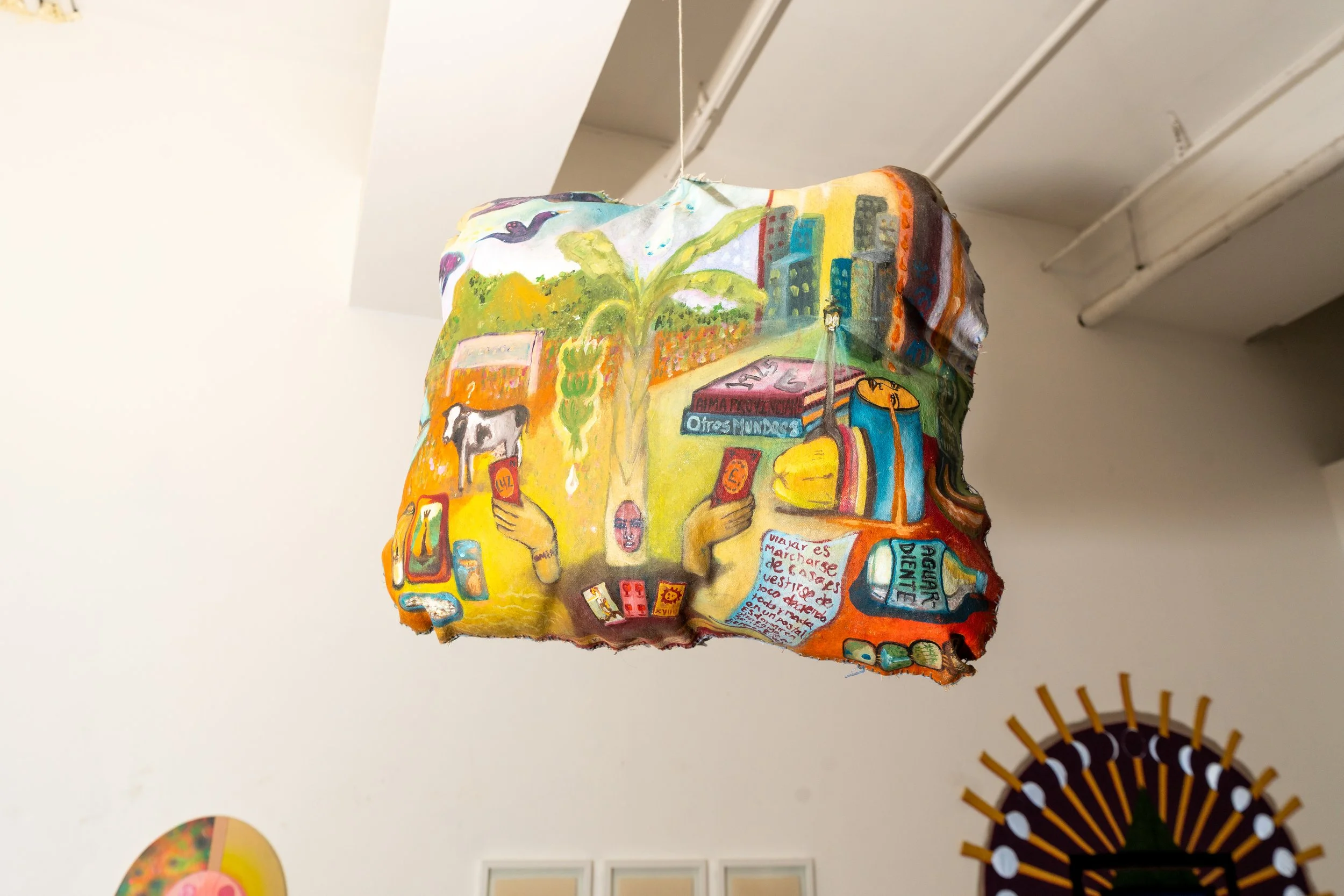
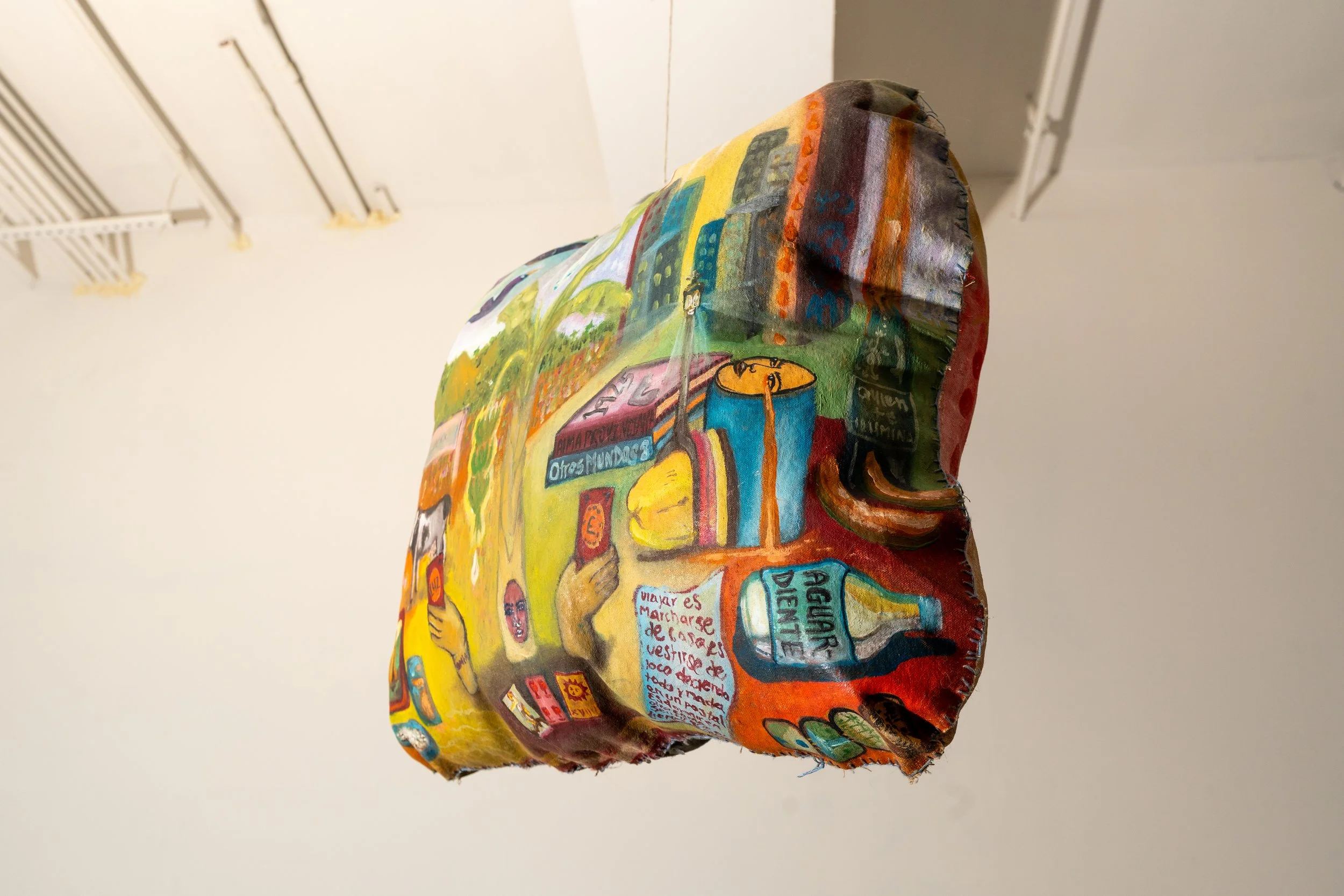
It hangs, unstretched, slightly sagging, refusing containment. I wanted it to feel like skin, something that holds memory and responds to pressure. The structure is not hidden behind it, it lives within it, in every stitch, every pull of fabric holding itself together.
Embedded within the composition are tarot cards. The ones held in the hands carry the initials of my grandmother, Luz Elena, who has since passed, a quiet gesture of remembrance, a way of keeping her presence active within the work. The cards laid out across the surface, The Tower, the Four of Cups, and The Sun, move between rupture, reflection, and renewal, mapping an emotional and spiritual terrain alongside the physical one.
There is a bottle of aguardiente, and fruit appears throughout, not just as imagery but as offering. These elements bring the work into a ritual space, where the everyday becomes charged, where objects carry memory, spirit, and intention.
On one side, a landscape unfolds, or perhaps remembers itself into being. A cow stands in a field that feels both real and imagined. Birds cross the sky. A banana plant rises at the center, almost glowing. For me, this is not simply land, it is inheritance. It is Colombia. It is a way of knowing rooted in the body, in relation to the earth, something I carry even when I cannot fully name it.
On the other side, the city compresses. This space becomes a gateway, specifically tied to my life in New York City, a threshold that both connects and separates me from my ancestral homeland. It is a site of transition, where movement between worlds becomes constant.
Beyond that threshold is a different relation, one where the land is not separate from us, but something we honor and move with. The plantain, the soil, the spirits all exist within a shared system of care and reverence. The work leans into that space as something deeply ritualistic, something intuitive, where magic is not spectacle but a daily, lived presence.
Between these two worlds, a body stretches.
The body does not resolve the tension. It absorbs it. It becomes the structure that holds contradiction.
Migration, for me, has never been a clean departure or arrival. It is this. A constant holding. A layering of realities that do not collapse into one another but insist on coexisting.
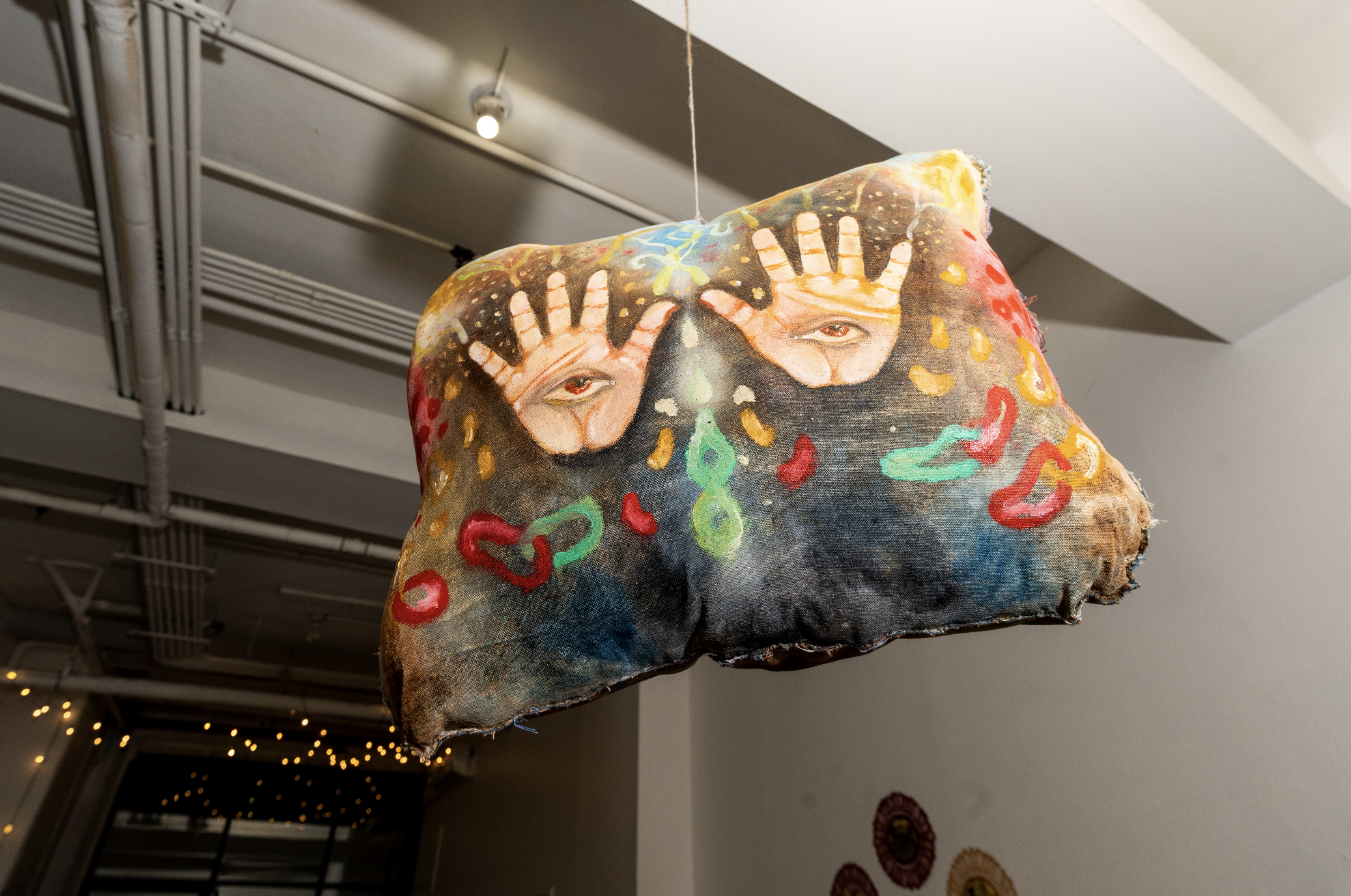
The reverse side of the piece reveals what cannot be immediately seen.
Hands open. Eyes embedded in the palms. Root-like forms extending across a darker field. It feels instinctive, almost subconscious. A different language of knowing.
I think of ancestry here. Not as something behind me, but as something moving through me. The eyes in the hands suggest a knowledge that is tactile, inherited, learned through repetition rather than instruction. The roots do not remain fixed. They move, searching, adapting, insisting on connection.
This is where migration becomes something else. Not just displacement, but transformation. Not loss alone, but continuation in altered form.
What made this exhibition feel especially alive were the voices that moved through it.
I spoke with Catherine, the curator, about how rare and necessary it felt to hear poetry within a gallery space. Not as an addition, but as part of the structure itself. Noah Ortiz read fully in Spanish, the language moving through the room with a kind of intimacy that resisted translation, insisting instead on presence. Aster Drewe followed with words that felt dreamlike, soft but expansive, opening another dimension of the space.
We spoke about how important it is to create environments where people are not afraid to speak, to respond, to exist alongside the work. To move away from the sterile quiet of traditional gallery systems that prioritize distance over connection. In that moment, the gallery became something else entirely. A site of gathering. A site of shared language, even across difference.
Those conversations continued.
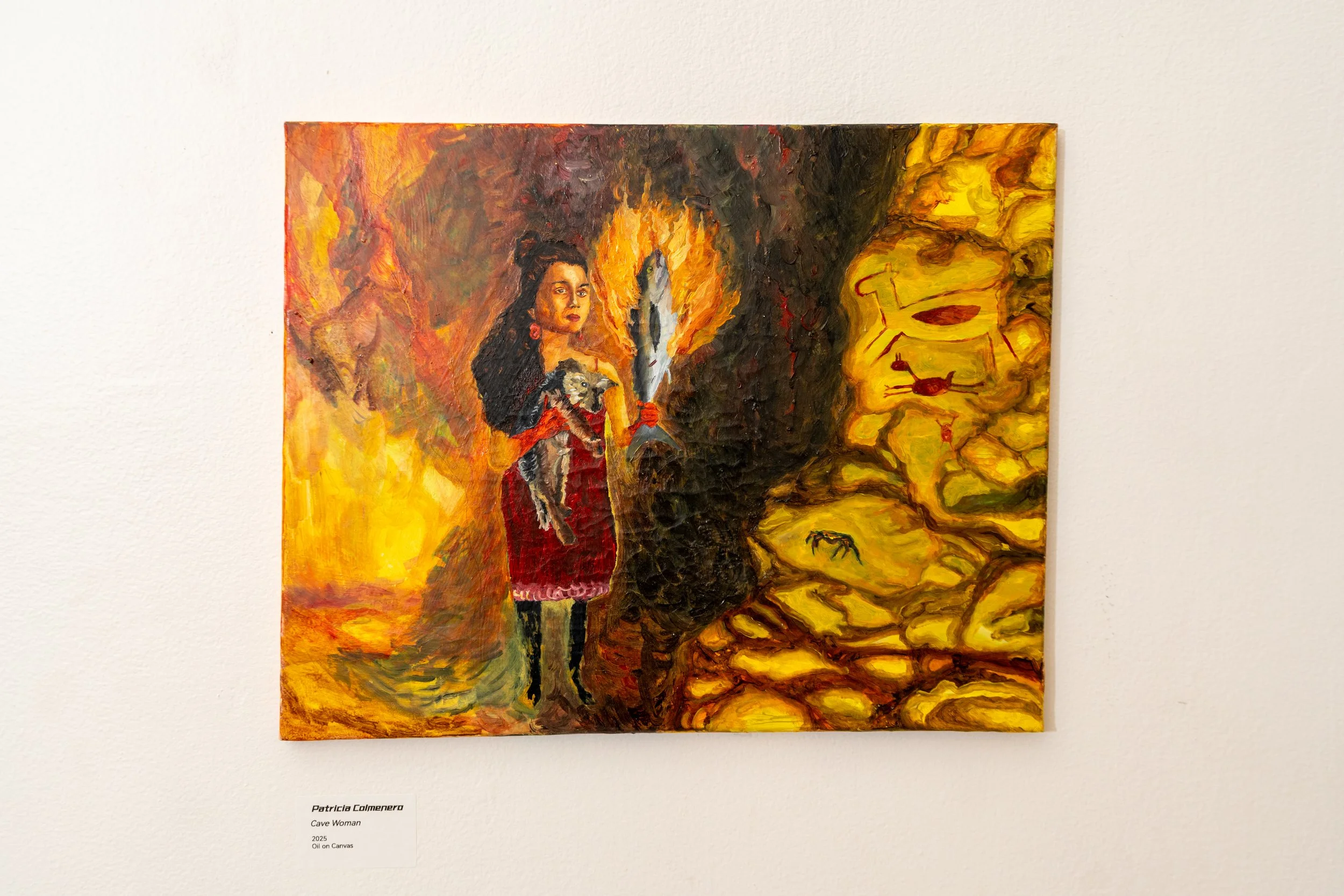
With Patricia Colmero, I spoke about immigration not as concept, but as lived reality. About how our work becomes a way of tracing our journeys into this world, of making visible what is often carried internally. There was a mutual recognition there, an understanding that the act of making is also an act of remembering, of insisting on presence.
I also spoke with Anna Pinkas about her embroidery practice. The way repetition becomes something beyond technique. How the body learns the motion so deeply that it no longer feels like effort, but like a rhythm. A kind of quiet devotion.
Painting with thread.
That stayed with me.
Because it made me think about my own process. The ways in which making becomes habitual, almost unconscious, but never empty. A therapeutic space, not in the sense of resolution, but in the sense of return. Returning to the body. Returning to memory. Returning to something that feels steady, even when everything else is shifting.
For years, I have said that I want to focus more on creating. It has been a promise that hovered, sometimes close, sometimes distant. But this moment feels different.
Something is aligning.
Ideas are not just floating, they are gathering weight. They are asking to be made. And more importantly, they are asking to be made in relation, in collaboration, in conversation with others.
That, too, is a soft structure.
Not fixed. Not rigid. But deeply supportive.
If painting, as Julian Bell suggests, is a space of ongoing relation rather than resolution, then this exhibition expanded that idea outward. The gallery itself became a kind of painting. Layered with voices, movements, encounters. Never still. Never complete.
And within it, my work found a place not as a singular statement, but as part of a larger ecology.
An ecology of bodies carrying multiple worlds. Of hands that know through making. Of roots that continue to grow, even in unfamiliar soil.
I am beginning to understand that what I am building, both in my work and in my life, does not need to be rigid to be lasting.
It can be soft.
It can shift.
It can hold.
Angel J. Rivas, Lutriz Studios @lutrizstudios
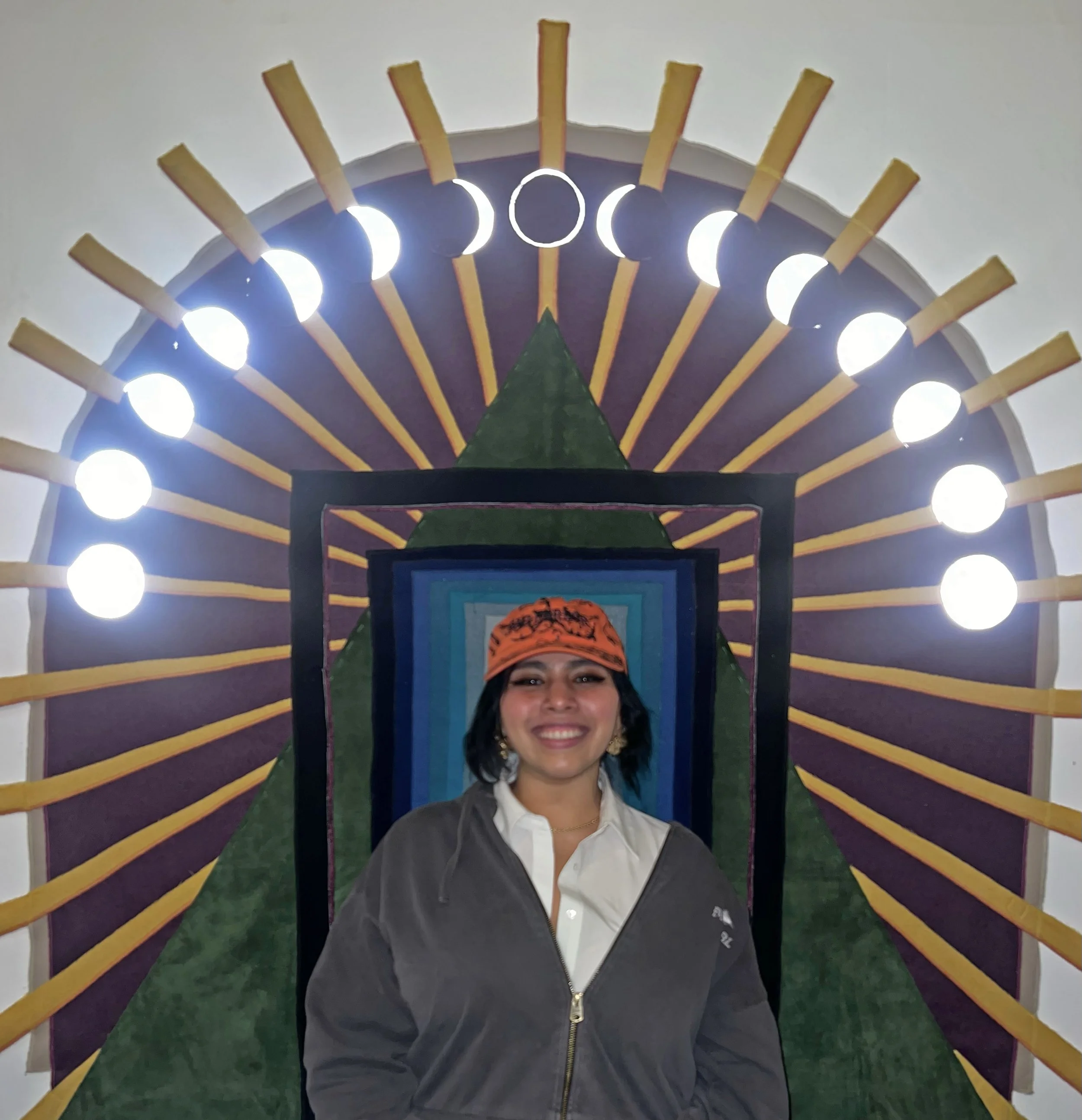
Headboard by Ethan Shoshan